As enterprises increasingly adopt cloud and SaaS solutions, the promise of flexibility and scalability is real. Yet with that benefit comes a lesser addressed danger: fragmented data protection. From delayed recoveries to compliance with blind spots, the cost of a broken backup strategy is growing.
For many businesses, especially in New Zealand, migrating to cloud environments means multiple service providers, varied backup tools, and data strewn across on prem, public cloud and SaaS platforms.
Understanding the Importance of Data Recovery
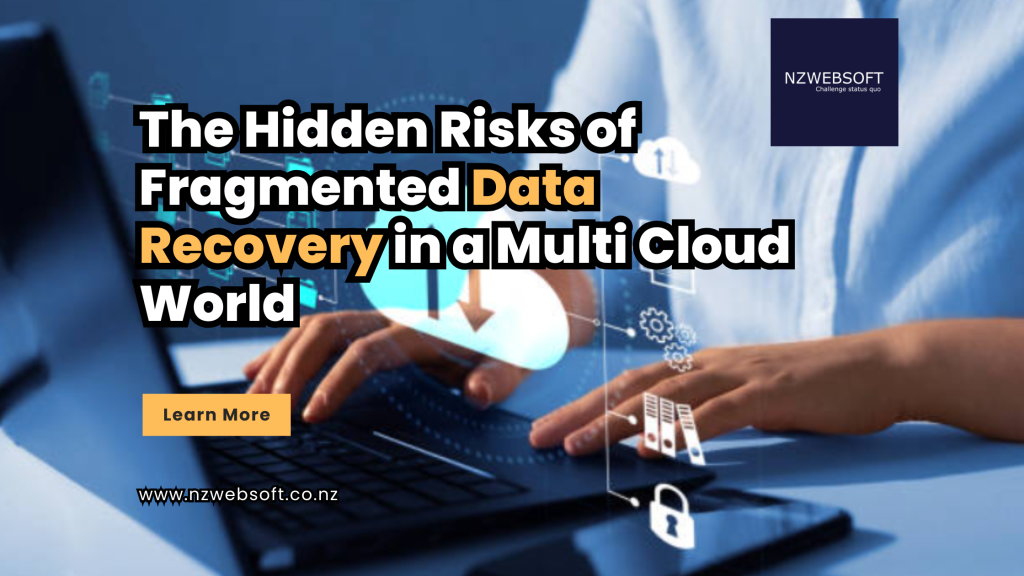
Fragmented data recovery in a multi cloud environment refers to the challenge of restoring data when backups and copies are spread across multiple cloud platforms and premises systems without unified control. Data is broken into fragments and dispersed over several cloud vendors to enhance security and availability, but this can complicate recovery processes. Each cloud may have different backup tools, security protocols, and recovery procedures, leading to inconsistencies, delays, and increased risks of data loss or prolonged downtime if systems fail. Effective fragmented data recovery requires integrated management to synchronize backups, automate recovery, and maintain compliance across diverse environments, ensuring business continuity despite the complexity of multiple clouds.
Key Hidden Risks of Fragmented Data Recovery
- Inefficiency and Slow Recovery: Managing multiple backup tools and platforms result in inconsistent recovery times, often missing Recovery Time Objectives (RTOs), causing prolonged downtime and financial losses.
- Security Vulnerabilities: Fragmented systems lead to inconsistent security protocols and gaps, increasing the risk of cyberattacks and data breaches across various cloud platforms.
- Compliance Challenges: Diverse cloud environments complicate adherence to regulations like data privacy laws, leading to fragmented audit trails and increased risk of non-compliance penalties.
- Higher Operational and Recovery Costs: Maintaining multiple backup systems demands specialized skills and resources, driving up operational expenses and recovery costs during outages.
- Limited Visibility and Control: Fragmentation hinders centralized monitoring of backup status and recovery readiness, delaying critical decision-making in disaster scenarios.
To mitigate these risks, organizations should pursue integrated multi cloud backup solutions, standardize security policies, automate compliance reporting, and regularly test recovery plans to ensure business continuity. This strategic approach reduces complexity, strengthens security, and optimizes costs in multi cloud data recovery.
Business Impact of Fragmented Data Recovery Risks
The business impact of fragmented data recovery risks in a multi cloud environment is significant and multifaceted. Inefficient recovery processes lead to extended downtime, directly causing lost revenue and productivity declines. This downtime also harms customer trust and brand reputation, critical factors in today’s competitive markets. Fragmented systems increase security vulnerabilities, exposing businesses to costly data breaches and cyberattacks. Compliance becomes harder to maintain, increasing the risk of legal penalties due to inconsistent data governance across clouds. Operational costs rise as organizations must manage and train disparate recovery tools, further straining budgets. Limited visibility into backups prolongs response times during incidents, worsening disruption. Ultimately, fragmented recovery jeopardizes business continuity, financial stability, and long-term growth, emphasizing the need for integrated, resilient recovery strategies that ensure seamless failover, consistent security, and regulatory adherence across all cloud platforms.
The Compliance Dimension: Cloud Isn’t Exemption from Regulation
Cloud environments are not exempt from regulations; compliance remains a critical dimension for organizations using cloud services in 2025. Cloud compliance involves adhering to laws and standards that govern how data is stored, processed, and secured within cloud infrastructures. Key regulations affecting cloud compliance include GDPR in the EU, HIPAA for healthcare data in the US, and CCPA for consumer privacy in California. These regulations require stringent controls to protect sensitive data, enforce privacy, and ensure ethical handling.
Managed cloud services that prioritize compliance can simplify these challenges by offering regulatory ready hosting solutions and continuous monitoring. Proactive adjustment of security policies and adopting scalable, adaptable cloud architectures are essential strategies to meet evolving compliance requirements. Ultimately, cloud compliance is vital to safeguarding data privacy, maintaining trust, and operating legally within an increasingly complex regulatory landscape.
Looking Ahead: Towards Unified, Resilient Data Protection
Looking ahead, the future of data protection is moving firmly towards unified, resilient solutions that seamlessly safeguard data across diverse environments on-premises, endpoints, multi cloud, SaaS, and emerging technologies like Generative AI. Unified platforms are designed to consolidate fragmented security controls, providing centralized visibility, real time threat detection, and automated response capabilities to address modern cyber threats effectively.
Leveraging AI and behavioral analytics, these platforms anticipate and neutralize complex attacks, such as ransomware or insider threats, before they can impact business operations. Scalability and policy based automation ensure these solutions adapt effortlessly to growing and evolving IT infrastructures without sacrificing performance or compliance.
Conclusion
The migration to cloud and SaaS has unlocked fantastic capabilities for businesses. But if your data protection strategy hasn’t evolved in step, you may be exposed not just to downtime, but to regulatory risk, cost escalation and missed opportunities. If you’re seeing signs of fragmentation of multiple backup tools, inconsistent recovery, low visibility now is the time to assess. A unified strategy isn’t a luxury; it’s the foundation of resilience in the multi-cloud era.
To learn more about “The Hidden Risks of Fragmented Data Recovery in a Multi-Cloud World,” you can contact NZWebSoft, a provider of innovative digital IT solutions in New Zealand.